

These Walls Have Scars
I think it’s safe to say that those of us who feel called to the profession of counseling are drawn to the idea of restoration. We sit with people in their brokenness, when life feels like a storm that has scattered pieces of them across the surface of the earth. According to Scripture, our fragility is inevitable. Paul speaks to this when he describes the “treasure” of the Gospel hidden within us, referring to us as earthen vessels, jars of clay.
So, what do we do with the broken pieces?
The beautiful attribute of clay is that even when it is broken, it can still be reused once it has been fired in the kiln. The shattered pieces can be repurposed. Some artists reclaim clay by drenching it in water and shaping it again into a workable material. Others create entirely new works of art, crafting mosaics from fragments of vessels that once were whole.
I often reference Kintsugi, in counseling, the Japanese art of repairing broken pottery with gold. This form of art transforms fractures into lines of beauty and strength, increasing the value of what was once considered ruined.
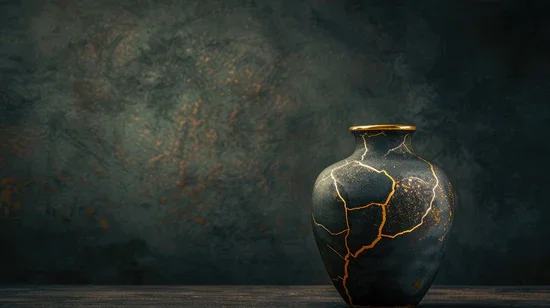
Recently our counseling practice moved locations. We had outgrown our previous space, and the “new” location turned out to be a restoration project of its own. The home, built in 1892, needed some loving attention. As we began preparing it to become a welcoming place for those who would enter its doors, it quickly became clear that the many years of life this house had held would not simply disappear under a fresh coat of paint.
These walls had scars.
Our director never asked me to help with the restoration work, but I felt compelled to do so. It’s where I often find peace, in the quiet art of serving. In my own life I’ve been blessed by the service of others and paying that forward feels natural. Yet in this particular instance, I felt as though God was speaking to me through the walls themselves.
As I’ve worked on these rooms, I’ve experienced a range of emotions. The process has required patience—a virtue the Father seems especially eager to help me exercise, perhaps because it remains one of my weakest spiritual muscles. One room in particular required far more than a simple facelift. As we worked, sections of wall came down with the old paint, revealing the need for repairs beneath the surface. The house had the quiet feeling of a place that hadn’t hosted much life for some time, and like many homes of its age, it simply needed some renewed attention and care.
This place, where the wounded and weary will soon sit, is not a picture-perfect environment. Its previous, dilapidated state remains visible even through the fresh coats of paint. The walls are brittle. The ceiling bears the marks of past leaks. Some fireplaces no longer provide warmth. Windows have been sealed shut, and the floors reveal patchwork repairs from years gone by.
And yet this is the place where those carrying heavy burdens will come to sit.
In many ways, the restoration of these rooms feels like a reflection of the work that will take place within them.
In the therapy room, I sometimes imagine that Jesus is the artist and that He is simply using me as one of His tools. We sit with people in a quiet room, laying all the shards of their lives on the table and helping them gently gather the pieces so that something new, a new jar of clay, can begin to take shape.
My prayer is that restoration will happen in the hearts of the people who sit within these walls. As we peel back the layers of life, gently buff out the rough edges, and help people see their stories from new vantage points, their lives, like these rooms, may still bear scars.
But those scars will tell a story.
They will be reminders of a life lived and a life restored. They will speak of resilience, of healing, and of grace that met people in their broken places. Scars do not mean destruction; sometimes they are the very evidence of new life.
May this place be a safe Haven where the weary come and find rest.
And may every scar within these walls quietly remind us that restoration is always possible.